Chinese and Foreign Youth Gather in Dali for “Lancang-Mekong Youth Exchange on Water Resources” to Discuss Lake Protection and Governance
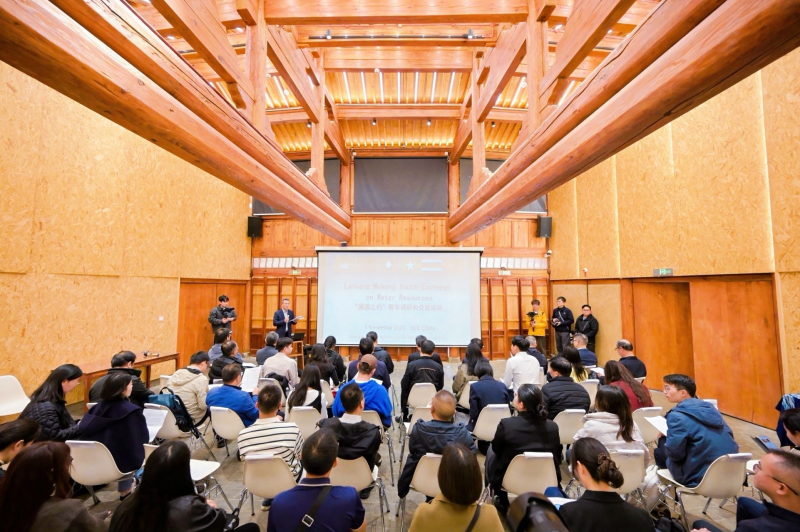
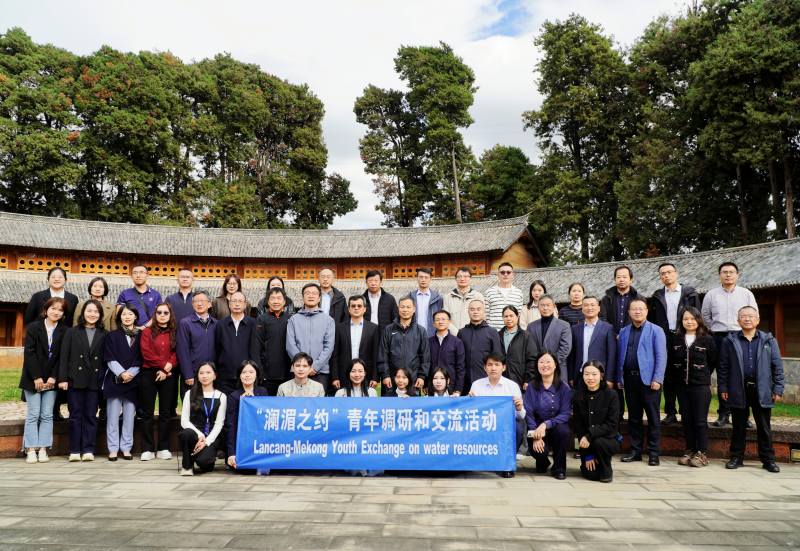
From November 2 to 6, the “Lancang-Mekong Youth Exchange on Water Resources” was held in Dali Yunnan Province. Diplomats, officials, young water experts, international students, and media representatives from the six Lancang-Mekong countries gathered to exchange views and discuss topics such as lake governance and protection, as well as how to tell the “Lancang-Mekong Story.”
Zhong Yong, Deputy Director-General of the Department of International Cooperation and Science and Technology of the Ministry of Water Resources, Long Dingbin, Second-Level Inspector of the Department of Asian Affairs of the Ministry of Foreign Affairs, and Wang Yingchun, Director of the Department of International Cooperation, Science and Technology of the Changjiang Water Resources Commission (CWRC) of the Ministry of Water Resources, attended the event and delivered speeches at the youth exchange session. H.E. Huasopa, Consul General of the Royal Embassy of Cambodia in Kunming, and other guests were also present. Zhou Zhiwei, Secretary General of the Lancang-Mekong Water Resources Cooperation Center, attended and hosted the youth exchange.
Zhong said, the Lancang-Mekong River is an important bond and bridge among the six Lancang-Mekong countries, providing crucial support for the drinking water, food, and energy needs of the people in the basin. In recent years, Lancang-Mekong water resources cooperation has yielded fruitful results, highly appreciated by the leaders of the six countries. Finding a balance between the protection and utilization of the Lancang-Mekong River is a vital issue, and he expressed hope that the participating youth representatives would actively offer suggestions and contribute to a better future.
Long noted in his address that over the past decade, the Lancang-Mekong Cooperation mechanism has continuously grown and achieved a series of results, becoming a model for regional collaboration. Youth are an important force for future Lancang-Mekong cooperation. He hoped that the young participants would strive to be innovators of Lancang-Mekong cooperation and inheritors of the Lancang-Mekong spirit, jointly promoting mutual learning among civilizations and closer people-to-people ties among the six countries.
Wang said that looking ahead, the CWRC is willing to work with the Mekong countries in the Lancang-Mekong basin to deepen exchanges with the younger generation, share water governance experience, broaden cooperation channels, and jointly promote the sustainable development of the Lancang-Mekong basin.
In his opening address, Zhou emphasized that the event aims to implement the consensus reached by the leaders of the six countries, focusing on the theme of “Lake Protection and Governance,” to deepen exchanges among the youth of the six countries in the field of water resources, and to contribute the wisdom of youth to enhance the governance capacity of the basin wide.
Then young water experts from the Lancang-Mekong countries shared their insights on topics such as “Lancang-Mekong Water Resources Cooperation Towards 2.0,” “Protection and Governance of Erhai Lake,” “The River and Lake Chief System and China’s River and Lake Protection,” “Protection and Utilization of Cambodia's Tonle Sap Lake,” and “Water Resources Protection and Ecological Environment Governance in the Lancang River Basin.”
During the interactive session, youth representatives and international students from Cambodia, China, Laos, Myanmar, Thailand, and Vietnam shared their experiences and reflections. Zheng Xiaoqiao, an international student representative from Lao PDR, said that she had previously learned about China’s experience in protecting and governing rivers and lakes, and the field visit to Erhai Lake during this event made these experiences more vivid and practical. “Practice has proven that ‘co-governance and shared benefits’ is the core of effective water resource management, which is worth learning from for the Mekong countries,” Zheng Xiaoqiao stated.
Shi Yu, Editor-in-Chief of the Myanmar Golden Phoenix Chinese Newspaper, shared that in his daily work, he has felt that the issues of greatest concern to the Myanmar public regarding Lancang-Mekong cooperation are always closely tied to improving livelihoods and sustainable development. These concerns indicate that the vitality of Lancang-Mekong cooperation is reflected in the “down-to-earth” details of people’s lives, and the public expects the cooperation mechanism to continuously translate into visible and tangible benefits.
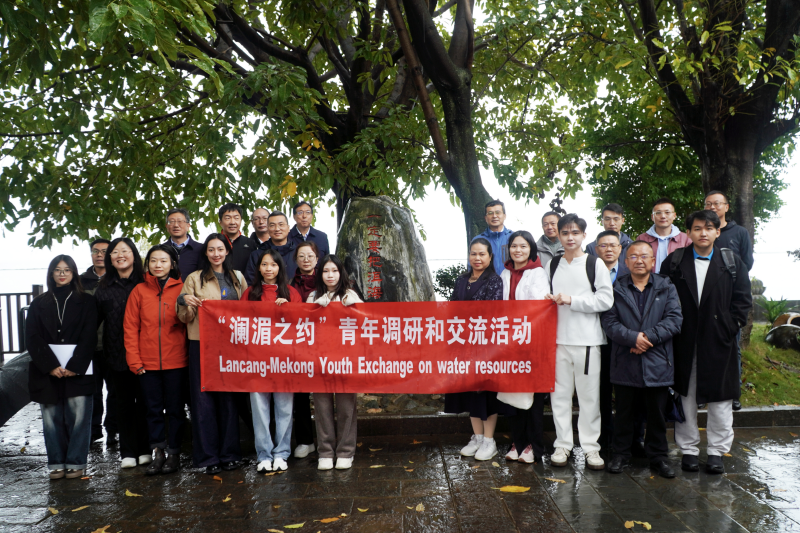
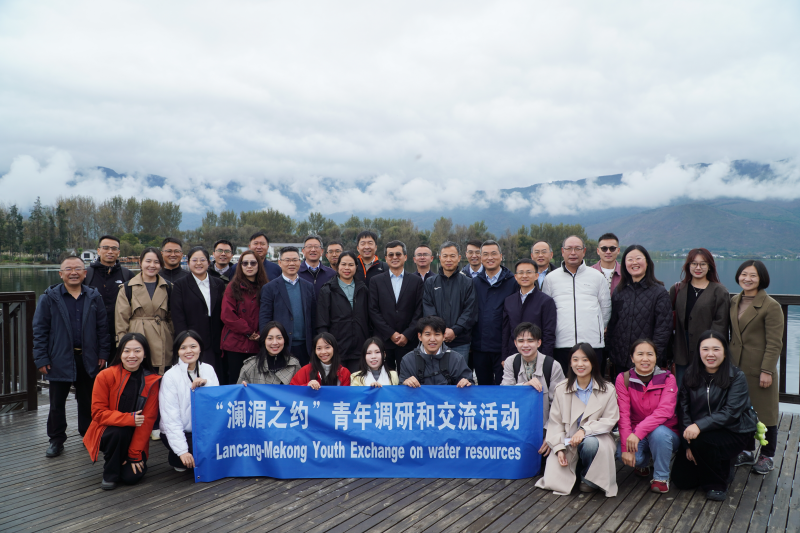
During the event, representatives also jointly surveyed sites such as Cibi Lake and the Erhai Lake Ecological Corridor, gaining an in-depth understanding of the significant achievements China has made in protecting the Lancang River and promoting water ecological governance in the basin.
This event is part of the “Lancang-Mekong Youth Water Exchange and Mutual Learning” program, hosted by the Lancang-Mekong Water Resources Cooperation Center and co-organized by Hohai University and China News Service.